
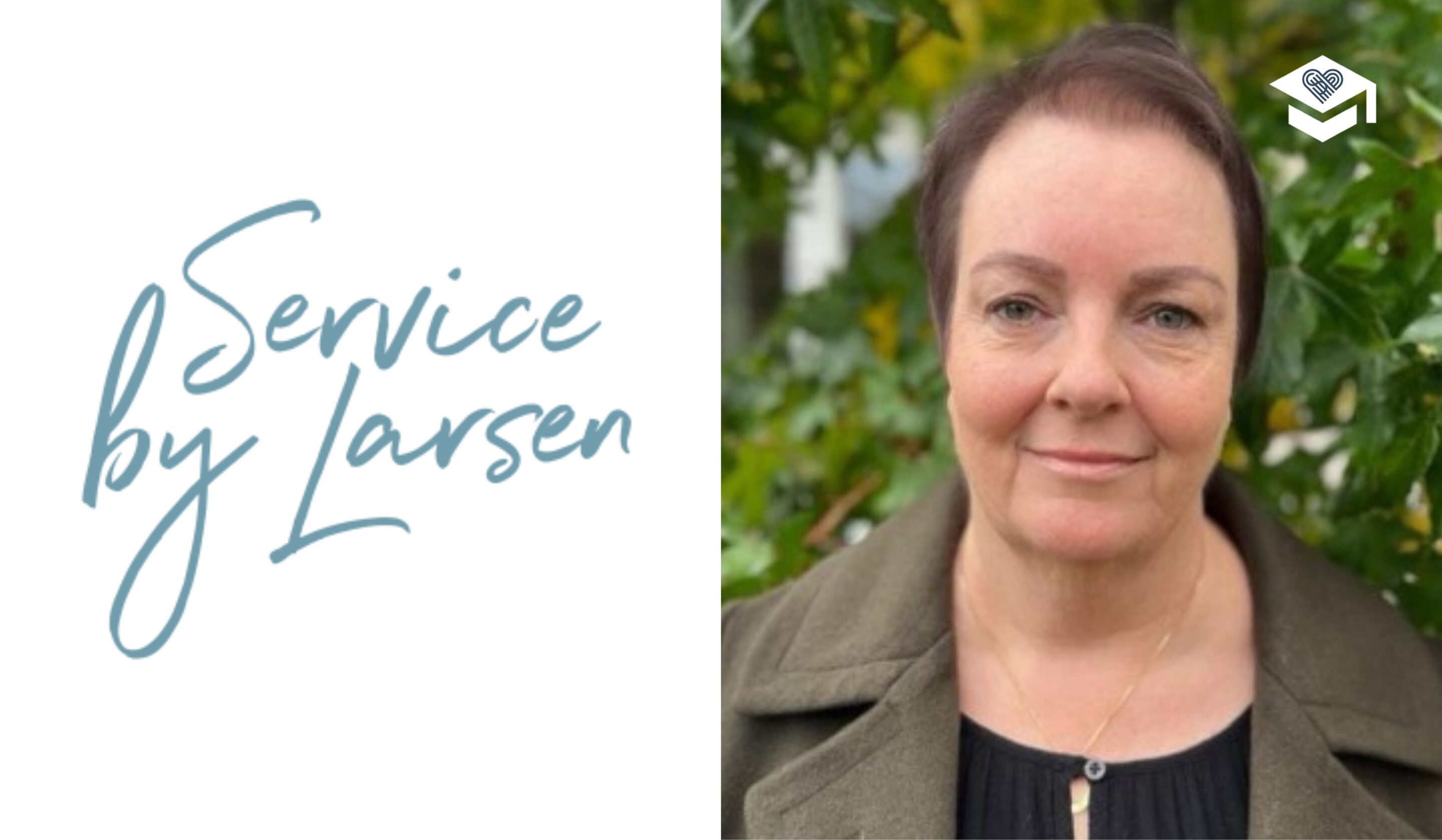
Doing well and doing good is no longer a ‘nice to have’ it’s a test of how we choose to run our business when the pressure is real.
There are industries where responsibility is not a strategy slide, but a daily decision. Where margins are tight, time is scarce and competition is driven by minutes and price. Professional cleaning is one of them.
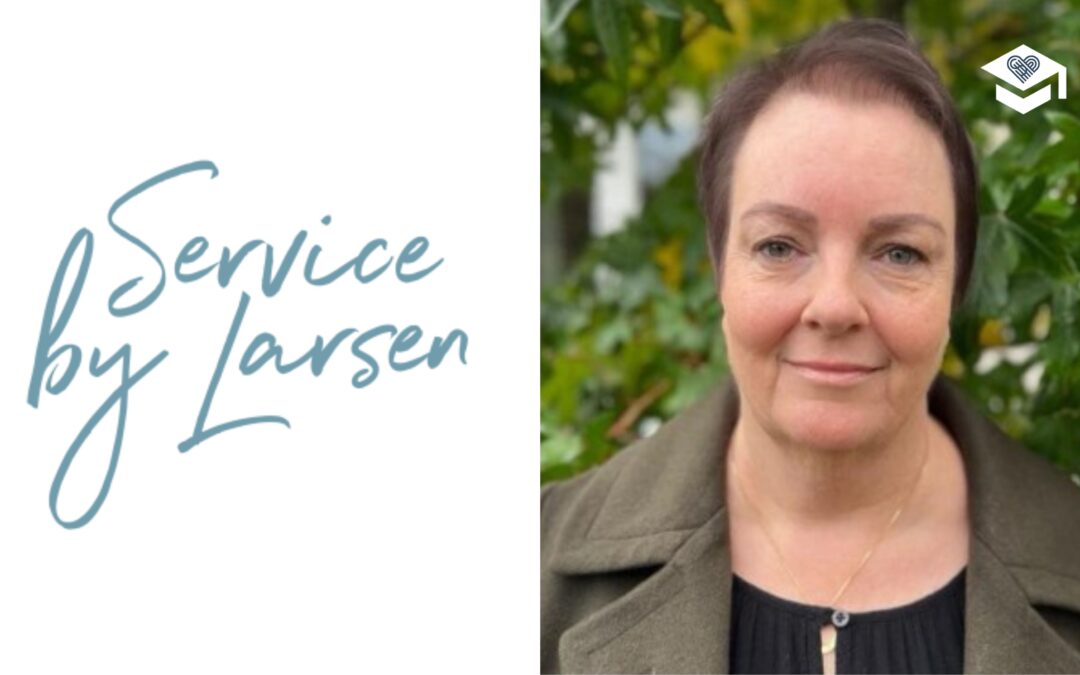
Yet this is exactly where owner-manager Lykke Larsen has chosen to take a different path: to build a company where responsibility is not a side project, but the way the business operates. Every single day.
From ambition to practice
Many of us recognise the ambition: to run a responsible business that creates value beyond the bottom line. But turning that ambition into something tangible into decisions, systems and behaviours is where things often become unclear.
For Lykke, the turning point came when she chose to strengthen her practical and strategic foundation through the Sustainable Business Change Manager programme. Here, she gained not just tools, but a way of thinking: a systemic perspective on how ESG factors can be integrated into core business operations rather than treated as a reporting exercise.
Because ESG, in practice, is not about frameworks alone. It’s about how we run our business on a Tuesday morning.
A different way of seeing the industry
Lykke’s background is in finance and advisory, both in Denmark and internationally. She began her entrepreneurial journey back in 2007, working with career and business consulting and developing online media.
But when she founded Service By Larsen in April 2023, something shifted.
Seeing the cleaning industry from the inside made one thing clear: too often, people are reduced to cost items, and quality is compressed into minutes.
And that raises a fundamental question: what happens when efficiency becomes an overdrawn bank account where people and quality are the first to be cut?
“After experiencing the industry from within, it became my passion to do it better, much better, for people, the environment and society.”
Challenging the default logic
At Service By Larsen, responsibility is not measured in polished statements, but in everyday choices.
In many organisations, ESG lives in a report or a department. Here, it lives in operations.
Take working conditions. In a price-driven market, this is often where companies ‘optimise’. Lykke has chosen the opposite: to treat fair working conditions as a prerequisite for quality not something to prioritise only when there is room.
Or inclusion. The company actively creates space for employees with special needs, even when it requires flexibility in planning and operations.
Or products. By using cradle-to-cradle certified cleaning products, environmental considerations are built into the service itself not added on later.
Individually, these decisions may seem small. Together, they begin to shift what “good business” looks like in an industry.
From values to direction
Wanting to run a responsible business is one thing. Building a clear strategy and a viable business model around it is another.
Before joining the programme, Lykke had strong values but lacked structure and direction.
“The biggest challenge was the lack of structure and direction. The ambition was there, but I needed the analytical tools and strategic overview to translate it into a clear mission, concrete goals and a coherent business model.”
Through the programme, she worked systematically with sustainable business development from analysis and strategy to implementation.
A very concrete outcome? The foundation to complete the company’s B Corp certification an internationally recognised standard for businesses balancing purpose and profit.
“The programme gave me the professional confidence and tools to structure and carry out our B Corp certification myself.”
And perhaps just as important, it strengthened her leadership:
“It has given me greater clarity and calm in my leadership, and the courage to stand firm in my decisions, even when they are not the easiest in the short term.”
When responsibility becomes a market driver
We often hear that ESG is being deprioritised. And in some places, that may be true.
But something else is happening at the same time.
There is a growing group of customers who actively choose responsibility when they can see it in practice.
“I’m most proud of the values-driven customers we’ve attracted those who have chosen us because responsibility, quality and fair working conditions actually matter in practice, not just on paper.”
And this is where things become interesting.
Because when customers begin to choose quality and responsibility as competitive parameters, we are no longer talking about ethics versus business. We are talking about ethics as business.
Even in industries long governed by minutes and margins.
Three reflections for change agents
So what can we take from this?
- Start in the everyday
Change doesn’t begin in strategy decks, but in daily decisions. - Define your non-negotiables
Be clear about what you will not compromise on—even when it costs. - Train your persistence
Sustainable change is built through small, consistent actions over time.
What does this mean for you?
If you’re working with ESG or considering how to this case is a reminder that integration is where the real value lies.
Not in adding more layers, but in weaving responsibility into how the business actually runs.
So perhaps the question is not: Where should ESG sit in our organisation?
But rather: Where are we still treating it as separate from the business itself?
👉 If you’re ready to move from ambition to action, consider how you can build the tools, structure and confidence to integrate ESG into your core operations. One decision at a time.
Read more about the Sustainable Business Change Manager programme here.